I received my diagnosis of Hypokalemic Periodic Paralysis in 2001, at the age of 33. That May, I experienced such weakness in my legs that I had to physically lift them out of the car to make it into work. In June 2021, I woke up one morning unable to move my legs—no movement at all, not even a toe. After about half an hour of panic, I began to be concerned. We rushed to the emergency room, where a series of tests revealed my potassium level was critically low at 2.2, far below the normal range of 3.8 to 5.2.
I spent two weeks in the hospital, paralyzed for ten days. The doctors ruled out numerous conditions, and the head of neurology suspected I might have this very rare disease. I was prescribed Diamox and Klor-Con to manage my condition. Unfortunately, I found myself back in the hospital at least 15 times over the next four months, each stay involving paralysis that lasted at least three days. I underwent extensive testing, including MRIs, CAT scans, blood work, EEGs, EMGs, genetic testing, and even a muscle biopsy. Eventually, after a Long Exercise EMG, I received a diagnosis that was confirmed by a neurologist and the head of neurology in Boston. Not wanting to believe I had an incurable disease, I went to Rochester, New York, where my diagnosis was verified yet again, but this time by Dr Tawil and Dr Griggs both experts in the field.
Driven by curiosity, I delved into research about this rare disease. Over time, I began to connect the dots and realized I might have experienced symptoms as early as age 16. During that time, I felt extremely weak for about five days, and a doctor attributed it to hypoglycemia. In my early 20s, I had episodes of paralysis, but they didn’t last more than 6 hours. Unfortunately I didn’t seek medical attention until days after these events, my doctor ran several tests, everything came back normal. Reflecting on my childhood, I recalled frequent weakness, but I dismissed it as mere fatigue, and others often labeled me as lazy. Unfortunately, this is a common experience for many with this condition, as it remains largely misunderstood.
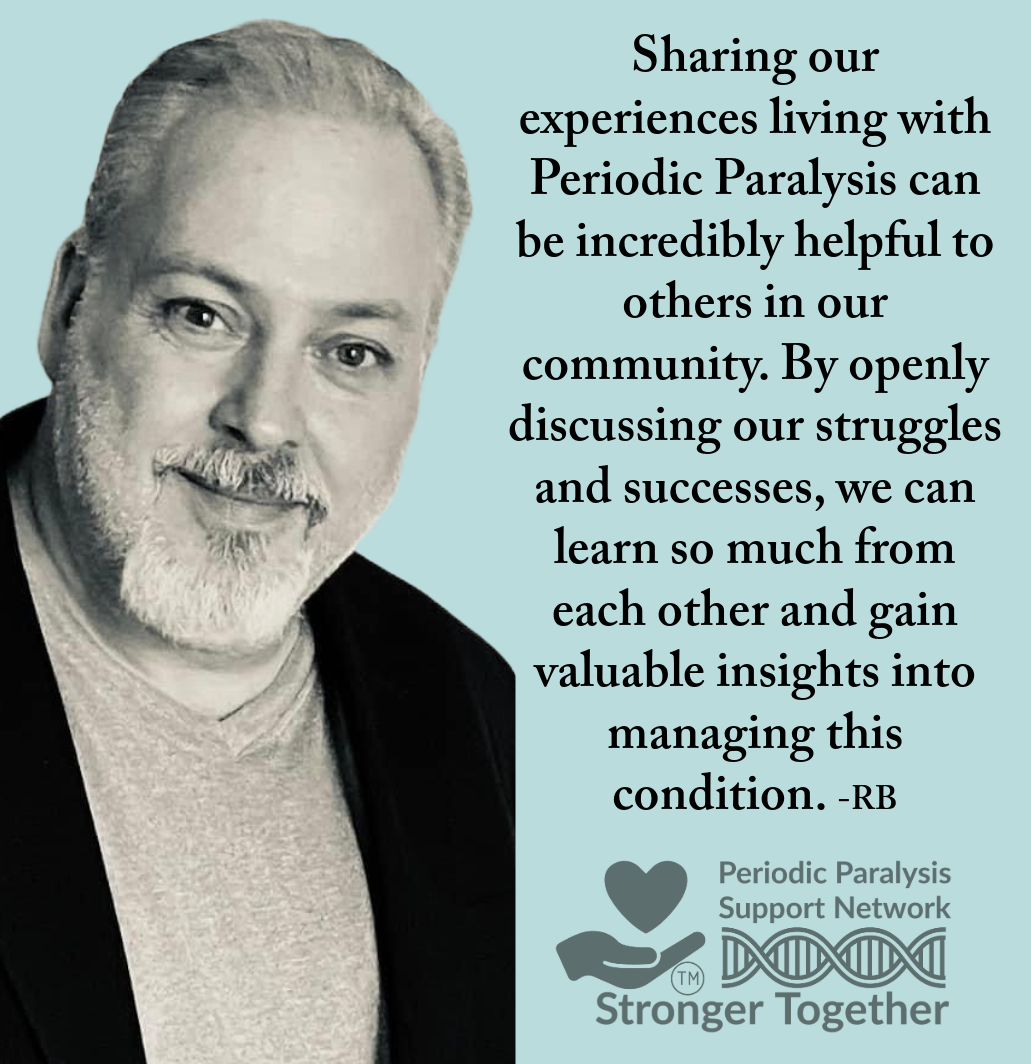
For the last 20+ years, I have been managing support groups for people living with periodic paralysis, I am the founder and director of the Periodic Paralysis Support Network.